


EMDR Intensives
Process the past & reclaim your present.
Becoming a parent — or trying to — can bring you face to face with experiences that leave a mark. Perhaps you experienced a birth that felt frightening or out of control. Or maybe a loss or time spent in NICU has stayed with you long after discharge. Perhaps it was fertility treatment that wore you down in ways that are hard to explain.
Whatever brought you here, the pain it's left behind is real and it makes sense that it's still with you. These aren't experiences people simply get over. But they are experiences that can be worked through.
Perhaps there's a distance opening up between you and your partner that you can't quite close. Or an exhausting watchfulness: over your baby, over your body, over the possibility of it happening again. Maybe certain images come back without warning, or you wake from dreams you'd rather not remember. It might be that talking about it feels impossible, even with the people who were there. Or perhaps it's subtler than that — a sense that you're not quite who you were before, that something shifted and you haven't found your way back to yourself yet.
An EMDR intensive offers focused, dedicated time to process what's been left unresolved. Rather than returning to it week by week in brief windows, you'll have the space to stay with it and begin to move through it.
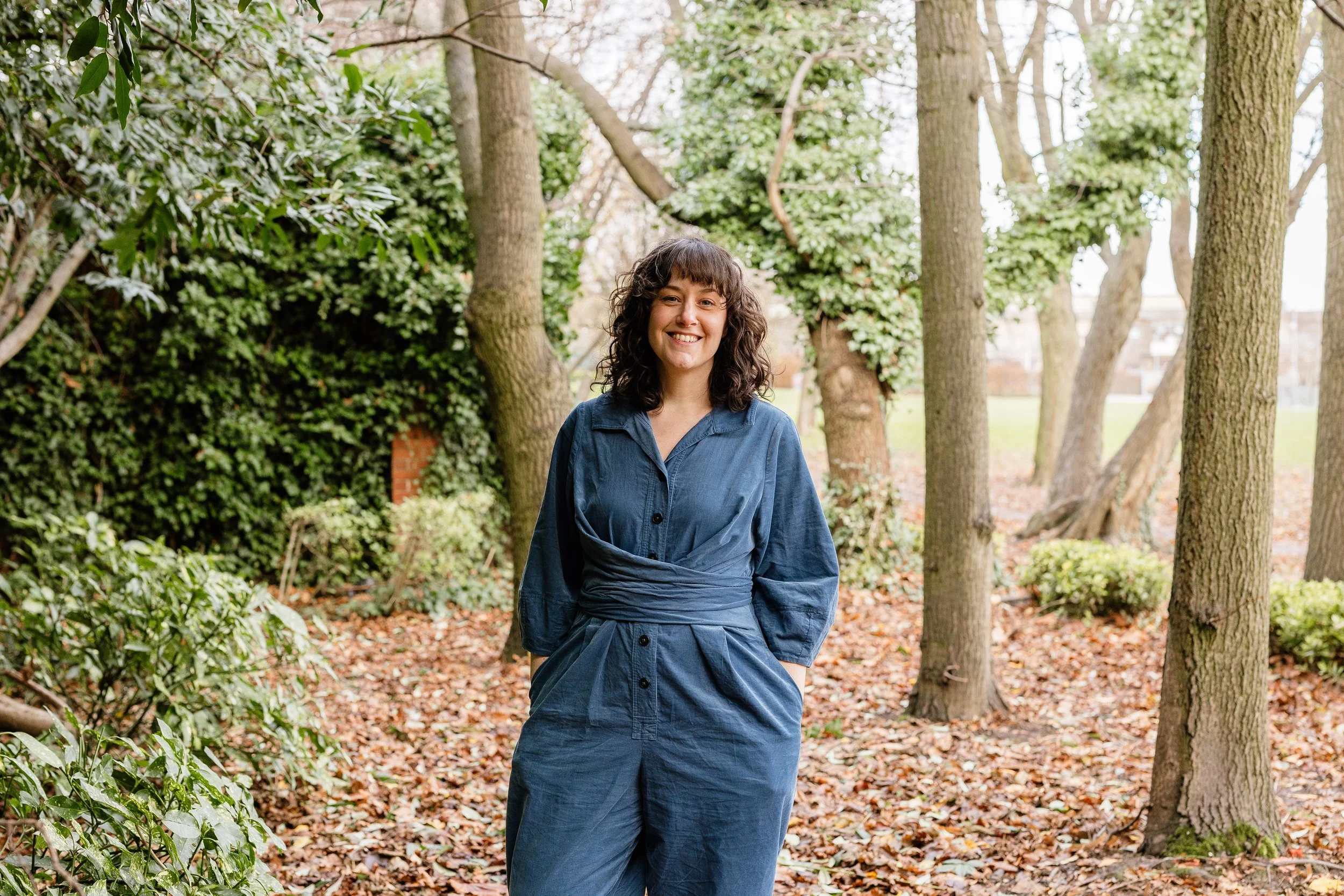
Meet Helen
I'm Dr Helen Lewis, and, amongst other things, I’m a Clinical Psychologist and EMDR Therapist. I work specifically with people navigating the journey to parenthood. I believe that what happens to us during that journey matters and shapes the relationships and families we're building.
Do more than talking
Traumatic experiences from the journey to parenthood often don't get stored as tidy memories with a beginning, middle, and end. They tend to live as fragments: an image, a physical sensation, an emotion that surfaces without warning. Part of what makes them so difficult to change is that they resist being thought through or talked around: they need to be processed at a different level. Rather than asking you to construct a narrative around what happened, EMDR works with the experience itself, reaching places that talking alone often can't.
An intensive takes that process and gives it room. Rather than returning to something difficult week after week — opening it up, closing it down, fitting it around everything else life demands — you have uninterrupted time to stay with it until it reaches a natural resolution. Memories that once felt overwhelming begin to lose their charge. You’re less reactive, irritable or snappy. There's more space to feel present — with your family, and with yourself. You’re not fixed (because you were never broken) but freed from something that had been clinging on.
And that change, which might take months to achieve in weekly therapy, can happen in a matter of days.
If you’re ready to focus on something that’s been holding you back, an EMDR intensive could be a powerful next step.
Fee: £1,875
Payment plans available
What’s included
In-depth assessment and treatment planning
We'll explore what you're hoping to work on, make sure this approach feels right for you, and create a personalised plan for the intensive.
Personalised preparation and integration workbook
Sent in advance to help you feel grounded and informed, with space for reflection, guidance on what to expect, and ways to stay supported before, during, and after the sessions.
Focused EMDR therapy, delivered over two or more days
Dedicated, uninterrupted time to stay with the processing, at a pace that suits you.
Held around two weeks later to reflect on the work, support integration, and think together about what comes next.
Follow-up session
FAQs
What actually happens in an EMDR intensive?
We start with an in-depth assessment session where we explore what you're hoping to work on, look at your history, and create a personalised plan for the intensive days. This is also a chance to make sure the approach feels right for you before anything begins.
The intensive itself takes place over two or more days, with extended EMDR sessions and enough time to stay with the processing rather than having to stop just as things are moving. You'll also receive a preparation and integration workbook in advance, designed to help you feel grounded and know what to expect.
Around two weeks later, we meet again to reflect on the work and think together about what comes next.
Is an intensive right for me?
An intensive can be a good fit if you feel ready to focus on something specific from your journey to parenthood and want to make meaningful progress in a contained period of time. You don't need to have everything figured out before you start; that's what the assessment session is for.
That said, intensives aren't the right option for everyone. If you're currently in crisis, or in a period of significant instability, a slower and more regular approach might be more appropriate for now. We'll talk through this together before any decision is made.
What kind of experiences can an EMDR intensive help with?
EMDR intensives with me are specifically for people who have experienced trauma as part of their journey to parenthood. That might be a birth that felt frightening or out of control, a loss at any stage of pregnancy, a termination for medical reasons, time in NICU, or the cumulative toll of fertility treatment. It can also be helpful for partners who witnessed a traumatic birth or loss, and who are carrying their own unprocessed experience of it.
If you're not sure whether your experience fits, the best place to start is a consultation.
How is an EMDR intensive different to weekly therapy?
Weekly EMDR therapy is really valuable, but it asks you to return to difficult experiences in short windows, week after week, fitting the work around everything else life demands.
An intensive gives you uninterrupted time to stay with the processing until it reaches a natural resolution. This can make a big difference and many people find they make more progress in a few days than they might in months of weekly sessions.
Is there evidence that EMDR works?
Yes. EMDR is a well-researched, evidence-based approach recommended by NICE for PTSD and shown to be effective for a range of trauma presentations. There is also a growing body of research specifically supporting its use for birth trauma, perinatal loss, and the psychological impact of difficult fertility journeys.
The intensive format draws on the same approach, with the addition of uninterrupted time. Research and clinical experience suggest this can deepen and accelerate the process.
I'm not sure what happened to me counts as trauma. Is this still for me?
Many people who come for an EMDR intensive aren't sure their experience was "bad enough" to warrant this kind of support, especially if others seem to have had harder experiences, or if the people around them have moved on.
Trauma isn't defined by the severity of an event, but by how it has been processed. If something from your journey to parenthood is still affecting how you feel, how you relate, or how you think about yourself, that's worth taking seriously, regardless of whether it fits a particular definition.
Stop waiting.
Book a free 30 minute consultation to discuss whether an EMDR intensive could be the right fit for you.