


EMDR INTENSIVES · SHEFFIELD
Process the past.
Reclaim the present.
Dedicated, uninterrupted time to work through what you're carrying from your journey to parenthood so that it can begin to feel like it’s in the past, rather than something that still affects your everyday.
Dr. Helen Lewis · DClinPsy · Clinical Psychologist
Investment from £1,875 · payment plans available
WHAT YOU MIGHT BE CARRYING
Sometimes what you meet along the way is something that felt frightening, completely out of your hands, or simply not how it was supposed to be.
The impact of these experiences is often hard to put into words. It might show up as unwanted images or disturbing dreams. Perhaps you find yourself in a state of exhausting watchfulness - constantly checking on your baby, monitoring your body, or dreading the possibility of it happening again.
For some, talking about it feels impossible, even with those who were there. For others, it's a subtler shift: a sense of not quite having found your way back to yourself. Whatever form it's taking, what you're carrying makes complete sense. These are not experiences you simply move past.
The path into parenthood rarely goes exactly as you imagined.
A birth that felt frightening or out of control
Pregnancy loss
Early days in NICU
A traumatic birth you witnessed as a partner
The relentless, cumulative toll of fertility treatment
WHY IT WON’T LET GO
You've probably already tried to make sense of what happened.
Perhaps you've talked it through with your partner or a close friend. Maybe you've even spoken to a professional, only to find that words don't quite reach the heart of it.
That's not because you're doing something wrong. Experiences like this don't get stored as neat, organised memories. Instead, they tend to stay closer to the surface often appearing as sudden images, unexpected jolts of feeling, or emotions that arrive with an intensity that seems completely disproportionate to what's happening.
This is why thinking your way through it often doesn't work, and why talking about it can sometimes only skim the surface. EMDR works differently. It works directly with the experience itself, reaching the places that talking alone often can't reach.
What EMDR does differently
Rather than asking you to find the right words for what happened, EMDR works directly with the stored experience which helps your mind do what it couldn't do at the time. This helps the memory feel like something that happened in the past, rather than something so that the memory can settle into the past where it belongs.
EMDR is an evidence-based treatment recommended by NICE & WHO with a growing body of research, supporting its use for birth trauma, perinatal loss, and the psychological impact of fertility struggles.
A DIFFERENT WAY OF WORKING
Weekly therapy is great. But sometimes it asks a great deal of you.
Each session means connecting with something painful, then finding a way to close it back down an hour later and continue with your day. Change happens, but it can sometimes feel like two steps forward, one step back.
THE CHALLENGE OF WEEKLY WORK
Opening and closing, week after week.
Processing difficult material in short, regular sessions means repeatedly returning to something painful without always having the room to follow it to resolution. Many people find this rhythm tiring. And although progress happens, it can feel slow.
WHAT AN INTENSIVE OFFERS INSTEAD
Uninterrupted time to stay with it.
Rather than returning to something week after week, an intensive gives your processing the room it needs. You can go as far as you need to, at your own pace, until things begin to resolve. Many people find they can move further in a few focused days than they might across many months of weekly sessions.
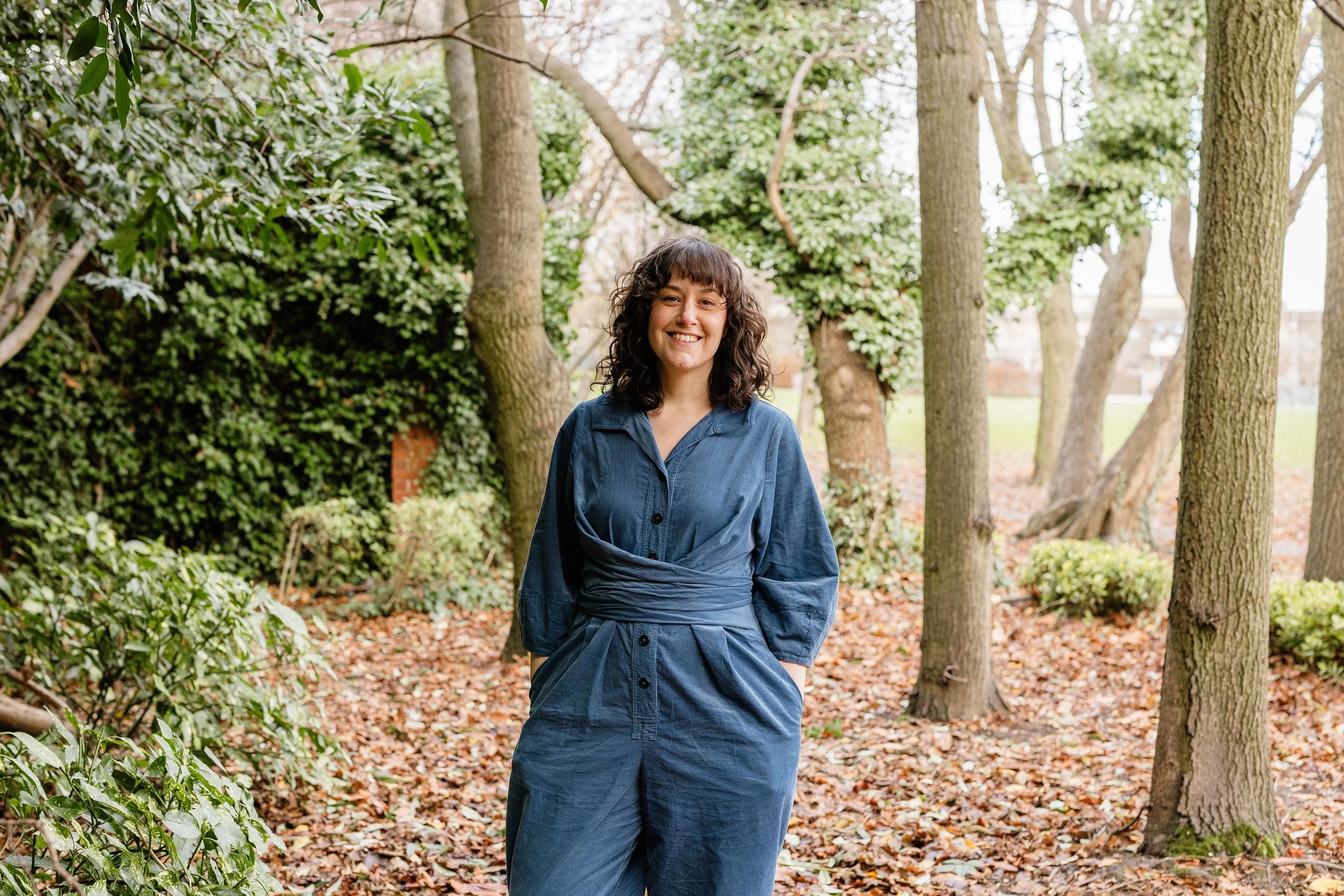
ABOUT YOUR PSYCHOLOGIST
I’m Dr. Helen Lewis. I’ve spent my career working with experiences that live at the edges of language.
I'm a Clinical Psychologist with over eight years of specialist experience in complex trauma. What drew me specifically to the transition to parenthood is a deep belief that these early experiences matter far beyond the moment in which they occur. When what's been carried is finally given the space to be worked through, the ripple effects move outward into our relationships, our families, and across generations.
I know that something from this chapter of your life is still with you, and I know that reaching out can feel uncertain. You don't need to be sure that what you experienced counts, or sure that this is the right step, before we speak

What your intensive includes
Your intensive is designed around you - your history & your goals. Here’s what’s included as standard, from the first conversation to the final follow-up.
01
In-depth assessment & planning
Before anything else, we spend time understanding what you want to work on, making sure this approach is the right fit, and building a plan tailored specifically to you.
02
Preparation & integration support
A workbook will be sent to you in advance, so you feel grounded and informed before we begin. Includes space for reflection and guidance to support you before, during, and after our time together.
03
Three dedicated mornings of EMDR
Your uninterrupted time. Extended EMDR processing sessions that take place at a pace that suits you, with room to go as far as the work requires. No watching the clock.
04
Follow-up Session
Around two weeks after we finish, we meet again to reflect on the work we've done together and to think about what comes next for you.
INVESTMENT
£1,875
Payment plans available - we can discuss this at your free consultation
The investment reflects the depth of preparation, the quality of uninterrupted time, and the specialist clinical experience that underpins every part of the work.
LIFE ON THE OTHER SIDE
When the thing you’ve been carrying starts to loosen its grip.
01
The images that kept arriving uninvited begin to fade. They become something that happened, rather than something that is still happening to you now.
The memories lose their power.
02
The edginess, the checking, the tensing, the readiness for something to go wrong starts to soften. Your body starts to learn that it can rest and relax again.
The watchfulness begins to shift.
03
You'll find it easier to be with your baby, with your partner and with yourself, without being pulled back into something from before. What happened will always be part of your story. But it will become just one part of it rather than dominating your narrative.
You find your way back to the present.
STARTING IS EASIER THAN YOU THINK
Three steps from here to there.
You don't need to have anything figured out before you reach out. The process is designed to take you from the first conversation to the work itself.
1
Book a free consultation
A 30-minute conversation, no pressure, no commitment. A chance to talk about what you've been carrying and to explore together whether an EMDR intensive feels like the right path for you.
We design your intensive together
2
A 90-minute planning session where we clarify what to focus on and make sure you feel grounded and ready before the processing begins. Your preparation workbook arrives ahead of time.
3
The processing begins
Three dedicated mornings of EMDR at a pace that suits you, followed by a follow-up session two weeks later to reflect on what's shifted and think about what comes next.
READY TO TALK?
You don’t need to have this figured out before you reach out.
The first step is a free, no-pressure 30-minute conversation. This is a chance to talk about what you've been experiencing and to think together about whether this is the right approach for you.
QUESTIONS
A few things people often want to know.
If something isn't answered here, the consultation is the right place to ask it.
-
We begin with a thorough assessment session to explore your goals, understand your history, and design a plan that's personal to you. The intensive itself runs over three dedicated mornings, with extended EMDR sessions and uninterrupted time to work through things at a pace that suits you. Your preparation workbook arrives beforehand so you feel ready when we start. Around two weeks later, we meet again for a follow-up session to reflect on what's shifted and to think about your next steps.
-
This tends to be a good fit if you feel ready to focus on something specific from your journey to parenthood and you're looking to make meaningful progress in a contained period of time. You don't need to have everything worked out before we speak — that's exactly what the initial consultation is for. If you're currently in a period of acute crisis or significant instability, a slower and more regular approach might be more suitable. We can explore what might fit you best during the consultation.
-
Birth trauma often affects both partners, in ways that may look very different. Alongside EMDR intensives for individuals, I also offer couples work using the Gottman Method, which can hold the relational impact of what happened. If this is relevant to you, it is worth mentioning when you get in touch.
-
This is one of the things I hear most often. Trauma isn't defined by the severity of what happened; it's defined by how that experience has been processed. If something from your journey to parenthood is still affecting how you feel, how you relate to others, or how you think about yourself, that deserves to be taken seriously. Please don't let uncertainty about whether you qualify stop you from reaching out.
-
Birth trauma, postnatal PTSD, pregnancy loss, termination for medical reasons, NICU stays, and the cumulative psychological toll of fertility treatment. This work is also well-suited to partners who witnessed a traumatic birth or loss and are carrying their own unprocessed experience of it. If you're unsure whether your experience fits, the best first step is simply a conversation.
-
Yes. EMDR is a well-researched, evidence-based approach recommended by NICE and proven effective across a range of trauma presentations. There is also a growing body of research supporting its use specifically for birth trauma, perinatal loss, and the psychological impact of fertility struggles. The intensive format draws on this same evidence base, with the added benefit of uninterrupted time. Clinical evidence suggests this can deepen and accelerate the processing.