


COUPLES THERAPY INTENSIVE · SHEFFIELD
Three mornings to
repair your relationship
Dedicated, uninterrupted time to understand what's happened to your relationship, and to begin building the one you've always wanted.
The problem
Dr Helen Lewis, Clinical Psychologist
ABOUT YOUR PSYCHOLOGIST
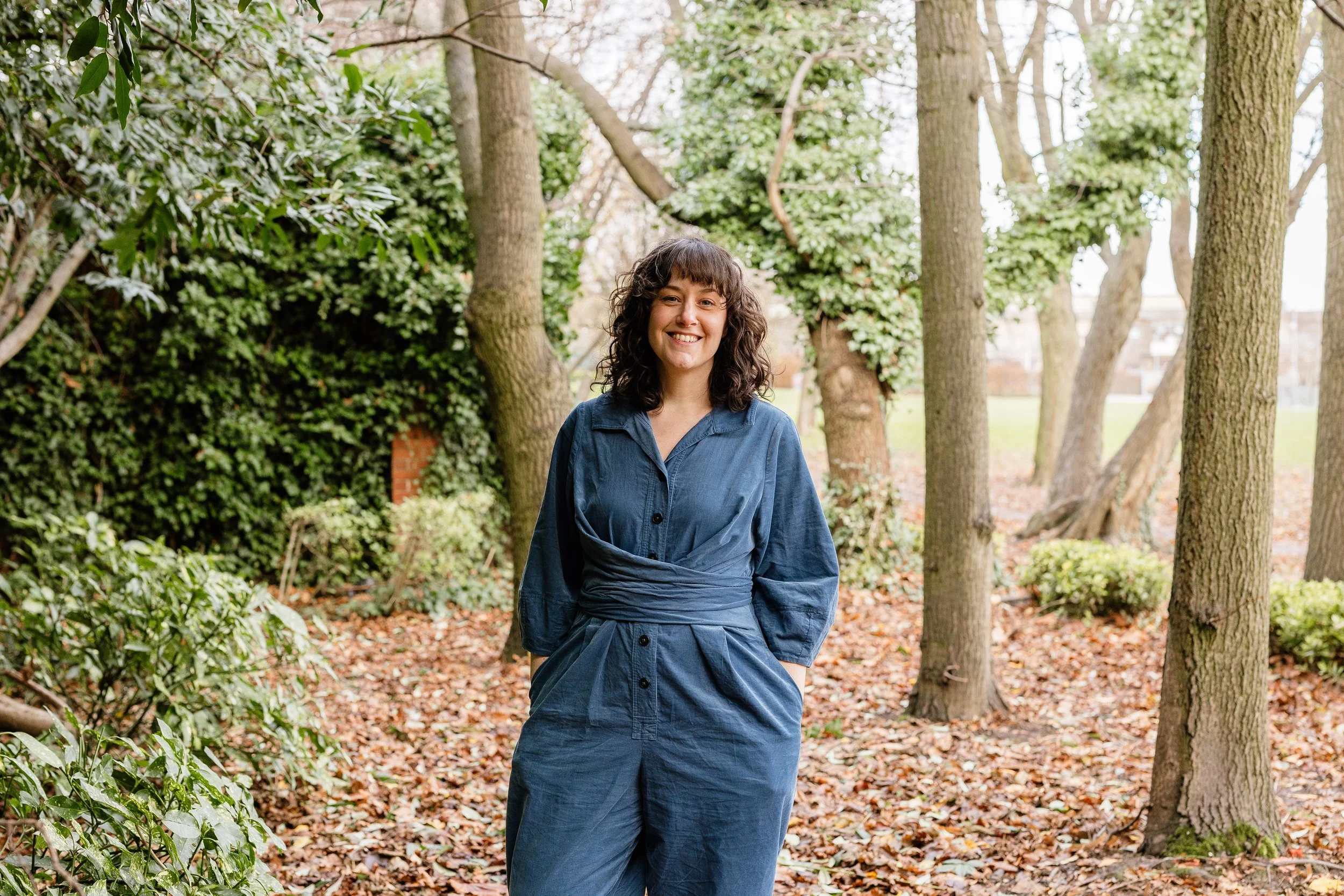
I specialise in the psychological and relational experience of building a family — from fertility and pregnancy through birth and the early years of parenthood and beyond.
I use Gottman Method Couples Therapy as the foundation of this work. It's one of the most extensively researched approaches to couples therapy in the world. My background as a Schema Therapist shapes the way I understand each of you as individuals: the histories and patterns you both bring into the relationship, often from long before it began.
My aim is never to keep couples in therapy indefinitely. The goal is to help you work through what's preventing you from having the relationship you want — and then to make myself redundant.
THE INTENSIVE AT A GLANCE
A week of preparation.
Three mornings of intervention.
01
THE WEEK BEFORE
Assessment & preparation
A thorough assessment week that includes individual and joint sessions, a research-based online assessment, and a feedback session — so that when we begin the intensive itself, we're ready to go deep from the very first morning.
02
THE INTENSIVE
Three consecutive mornings
Held over Tuesday, Wednesday and Thursday mornings. The concentrated format means what emerges on day one is still alive on day three so nothing gets lost, and the work builds on itself with a sense of momentum.
03
Gottman Method Couple Therapy
THE APPROACH
Grounded in more than forty years of research into what actually makes relationships work. Assessment-led, evidence-based, and practically-focused with individual formulation woven through the whole process.

What the two weeks look like
THE FULL PROCESS
Rather than diving straight into three days of couples therapy, the assessment means that every hour of the intensive is used and we’re not still finding our feet on day two.
THE WEEK BEFORE
1.
Joint assessment session
Both partners together. We explore your relationship history, what brought you here, and what you're hoping for. This session begins to map the patterns between you and shapes everything that follows.
90 MINUTES
A research-based assessment completed by each partner separately, in their own time. It generates a detailed picture of your relationship's strengths and the dynamics causing the most friction and often captures things that are hard to say out loud.
COMPLETED ONLINE, INDEPENDANTLY
2.
Gottman Connect assessment
Each partner meets with me separately to help me understand your unique histories, fears and what each of you are carrying.
4.
60 MINUTES EACH
3.
Individual sessions
Feedback session
We come together to review what the assessment tells us about your relationship’s patterns, strengths and the places where things have got stuck. This session clarifies the focus and goals for the intensive.
60 MINUTES · BOTH PARTNERS
THE INTENSIVE WEEK
TUE
3 HOURS
Opening the work
We begin with what the assessment identified and go directly into the patterns between you. First sessions are often surprising — there's a pace and depth available that weekly therapy takes months to reach.
WED
3 HOURS
We continue with our work from Tuesday. There's no need to catch up on what’s happened during the week and we can pick up exactly where we left off and move further in.
Going deeper
THU
3 HOURS
Consolidating and looking forward
The final morning brings the work together. We identify what's changed, what tools you're leaving with, and what you want to nurture going forward.
Sessions take place at my Sheffield consulting room. Start dates and times can be discussed at initial enquiry. The three-hour blocks run consecutively across the same week.
Three steps to starting therapy.
GETTING STARTED
FREE · 20 MINUTES
Initial consultation
A short, no-pressure conversation to talk through what's been happening and think together about whether this feels the right step for you. No commitment required.
SESSIONS 1-3
Assessment & Feedback
Four dedicated sessions that give us a thorough understanding of your relationship and a clear plan for the work ahead. By the end, you know exactly what you're working on and why.
ONGOING
Weekly couples therapy
Weekly 60-minute sessions, held at my Sheffield consulting room or online. We work your goals and your relationship needs to meet what's most alive for you. Couples typically work for 4–12 months.
WHERE THIS WORK MIGHT TAKE YOU
A different kind of normal
The Gottman Method is built on over four decades of research into what makes relationships last. Through therapy, conversations that used to spiral can start to have different endings. The tension that used to sit between you begins to shift. There's more room to actually hear each other, even when you see things completely differently.
Therapy can help you listen without defensiveness, express what you need without fear, and begin to reconnect.
You’ll start to recognise the familiar patterns before they start to escalate so you can interrupt it without either of you feeling abandoned or attacked.
Breaking the negative cycles
Gottman’s research shows that couples who have a rich mutual understanding of each other’s inner world manage stress and change much better. You’ll rebuild emotional intimacy.
Being known again
We’ll work to help you both understand what you’re bringing with your from your own history so you can make sure it doesn’t repeat.
Understanding your own part
A free, no-pressure conversation is all it takes to begin.
READY TO START?
20 minutes · no commitment required
COMMON QUESTIONS
Frequently asked
If something here doesn't answer what you're wondering about, the free consultation call is always the best place to think it through together.
-
The assessment is designed to give us a thorough understanding of your relationship before the weekly work begins. It starts with a 90-minute joint session where we explore what's brought you to therapy and talk about the history of your relationship. Each of you then completes Gottman Connect, an online assessment that maps your relationship across a range of dimensions. After that, each partner has a 60-minute individual session. The four sessions finish with a joint feedback and planning session, where I share what I've found and we agree together on what to focus on.
Taking this time at the start means the work that follows is properly tailored to your relationship, rather than based on assumptions and ensures that by the time weekly sessions begin, neither of you is going in blind.
-
This is very common, and it doesn't mean therapy won't work. It's often the case that one partner feels more ready than the other, or has mixed feelings about what it might involve. Sometimes people worry about what will be said, whether they'll feel blamed, or whether it will make things worse rather than better.
If your partner is hesitant, it can help to start with the free consultation call. That conversation is low-pressure and doesn't commit either of you to anything. Many people find that the reluctance reduces once there's been a chance to ask questions and get a sense of what the process actually involves.
-
Couples therapy tends to be a good fit when the difficulties feel relational and when it's the dynamic between you, rather than something one person is carrying alone, that feels most stuck.
Individual therapy might feel more relevant if one of you is dealing with something significant of your own that feels separate from the relationship, though the two often overlap more than people expect.
If you're still unsure, the free consultation call is a good place to think this through. There's no obligation to commit to anything, and it's often easier to make that decision after a conversation than before one.
-
The four assessment sessions are £155 each. Follow-up sessions are £130 each. The initial consultation call is free and carries no obligation.
-
Not at all. Some couples come because something significant has happened such as a betrayal, a period of real difficulty, or a rupture that hasn't healed. But many seek support simply because something feels off and they want to address it before it becomes more entrenched. Coming earlier, while there's still goodwill and motivation on both sides, can actually make the work more straightforward.
Therapy doesn't have to be a last resort. It can also be a choice to take the relationship seriously and invest in it, whatever stage you're at.