


WEEKLY COUPLES THERAPY · SHEFFIELD & ONLINE
not just how you argue.
Change the way you relate,
Weekly couples therapy to work through what's keeping you stuck so that your relationship can start to feel easier, warmer and more like the partnership you always wanted it to be.
Most couples don’t arrive in crisis.
WHAT BRINGS COUPLES HERE
They arrive in silence.
You came into parenthood as partners but somewhere in the exhaustion, the logistics, and the love you feel for your child, the two of you got a little lost to each other. That doesn't mean something has gone wrong, only that something needs tending.
It usually isn’t just one thing but the accumulation of so many things: the same argument that follows the same pattern and is never really resolved, the way you feel lonely in a relationship that used to feel close, how the warmth between you doesn't feel the way it used to.
Most couples who reach this point have already spent time trying to work through it themselves, revisiting the same conversations and hoping that something will change. Often it does, briefly, before the pattern comes back.
Whatever you're facing, it's rarely because of a lack of effort or goodwill. What shapes the dynamic between you is often hard to see clearly from inside it, and even harder to change without some support.
The same argument, again
The topic might change, but the pattern stays the same with the familiar escalations and shut downs.
You're not sure if this is a phase or just how things are now.
It's been difficult for a long time and you've started to wonder whether this is just how it is.
In love, but disconnected
Something in your relationship feels further away than it used to, and you're not quite sure when that happened.
Dr Helen Lewis, Clinical Psychologist
ABOUT YOUR PSYCHOLOGIST
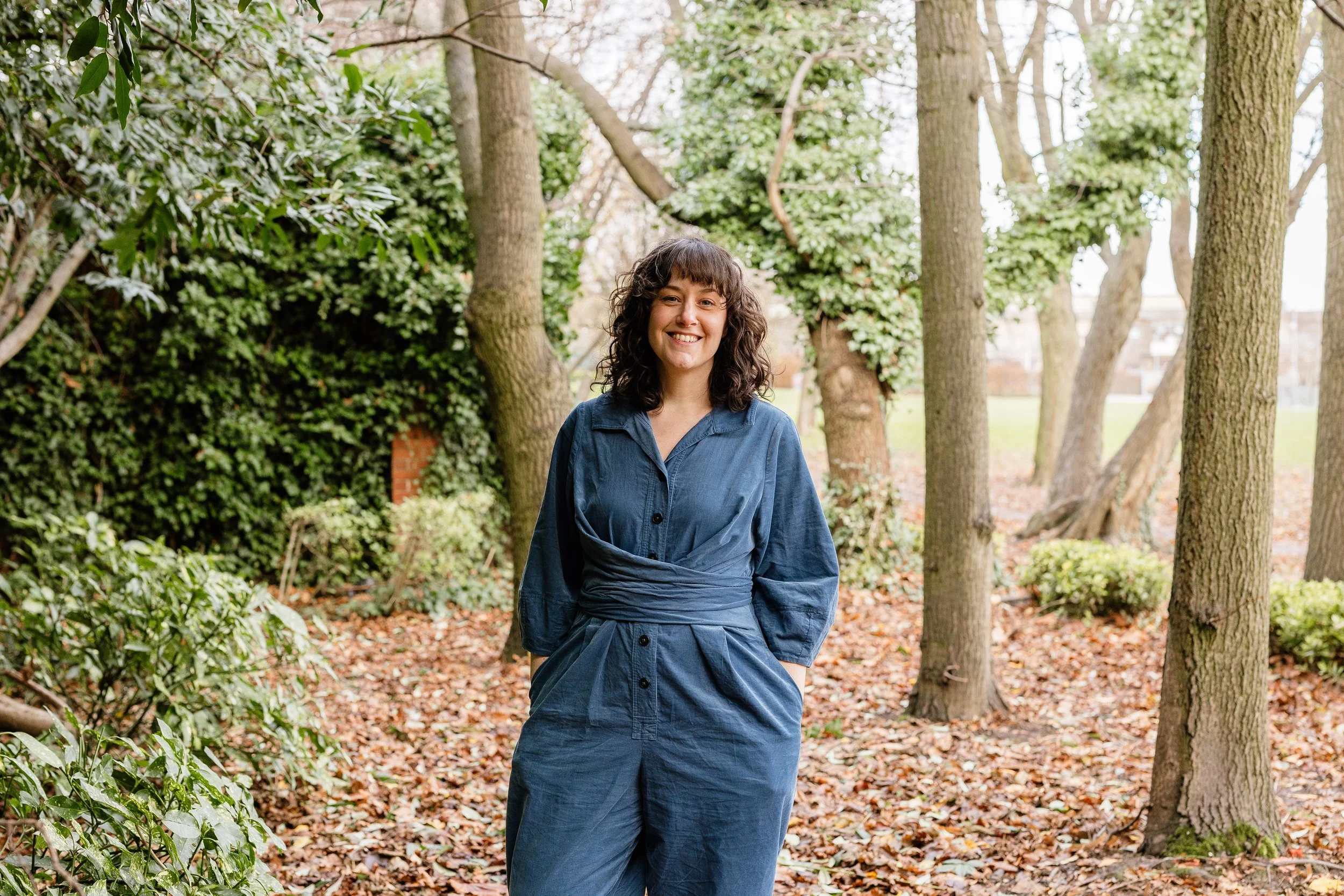
I specialise in the psychological and relational experience of building a family — from fertility and pregnancy through birth and the early years of parenthood and beyond.
I use Gottman Method Couples Therapy as the foundation of this work. It's one of the most extensively researched approaches to couples therapy in the world. My background as a Schema Therapist shapes the way I understand each of you as individuals: the histories and patterns you both bring into the relationship, often from long before it began.
My aim is never to keep couples in therapy indefinitely. The goal is to help you work through what's preventing you from having the relationship you want — and then to make myself redundant.

A clear path back to each other
HOW IT WORKS
Before the weekly work begins, we spend time understanding your relationship properly. Then sessions are structured around the goals you've identified together with space to work on what's live for you right now.
01
The Assessment
Four dedicated sessions designed to give us a thorough understanding of your relationship before the weekly sessions begin.
A 90-minute joint session exploring what's brought you to therapy and the history of your relationship
Gottman Connect: an online assessment each of you completes separately, mapping your relationship across a range of dimensions
A 60-minute individual session with each partner, giving you both space to speak privately about your own perspective
A final 60-minute feedback and planning session where we develop a clear picture of what's happening, and a plan to address it
Weekly Sessions
02
Sessions are 60 minutes and structured around the goals you've identified together. We work with what's live for you right now, as well as what the assessment has identified as the best place to start.
This helps make sure the foundation of your relationship is strong enough to support the harder work and that the changes you make together last.
SESSION FEES
£155
/ assessment session
£130
/ follow-up session
Initial consultation call is free
Three steps to starting therapy.
GETTING STARTED
FREE · 20 MINUTES
Initial consultation
A short, no-pressure conversation to talk through what's been happening and think together about whether this feels the right step for you. No commitment required.
SESSIONS 1-3
Assessment & Feedback
Four dedicated sessions that give us a thorough understanding of your relationship and a clear plan for the work ahead. By the end, you know exactly what you're working on and why.
ONGOING
Weekly couples therapy
Weekly 60-minute sessions, held at my Sheffield consulting room or online. We work your goals and your relationship needs to meet what's most alive for you. Couples typically work for 4–12 months.
WHERE THIS WORK MIGHT TAKE YOU
A different kind of normal
The Gottman Method is built on over four decades of research into what makes relationships last. Through therapy, conversations that used to spiral can start to have different endings. The tension that used to sit between you begins to shift. There's more room to actually hear each other, even when you see things completely differently.
Therapy can help you listen without defensiveness, express what you need without fear, and begin to reconnect.
You’ll start to recognise the familiar patterns before they start to escalate so you can interrupt it without either of you feeling abandoned or attacked.
Breaking the negative cycles
Gottman’s research shows that couples who have a rich mutual understanding of each other’s inner world manage stress and change much better. You’ll rebuild emotional intimacy.
Being known again
We’ll work to help you both understand what you’re bringing with your from your own history so you can make sure it doesn’t repeat.
Understanding your own part
COMMON QUESTIONS
Frequently asked
If something here doesn't answer what you're wondering about, the free consultation call is always the best place to think it through together.
-
The assessment is designed to give us a thorough understanding of your relationship before the weekly work begins. It starts with a 90-minute joint session where we explore what's brought you to therapy and talk about the history of your relationship. Each of you then completes Gottman Connect, an online assessment that maps your relationship across a range of dimensions. After that, each partner has a 60-minute individual session. The four sessions finish with a joint feedback and planning session, where I share what I've found and we agree together on what to focus on.
Taking this time at the start means the work that follows is properly tailored to your relationship, rather than based on assumptions and ensures that by the time weekly sessions begin, neither of you is going in blind.
-
This is very common, and it doesn't mean therapy won't work. It's often the case that one partner feels more ready than the other, or has mixed feelings about what it might involve. Sometimes people worry about what will be said, whether they'll feel blamed, or whether it will make things worse rather than better.
If your partner is hesitant, it can help to start with the free consultation call. That conversation is low-pressure and doesn't commit either of you to anything. Many people find that the reluctance reduces once there's been a chance to ask questions and get a sense of what the process actually involves.
-
Couples therapy tends to be a good fit when the difficulties feel relational and when it's the dynamic between you, rather than something one person is carrying alone, that feels most stuck.
Individual therapy might feel more relevant if one of you is dealing with something significant of your own that feels separate from the relationship, though the two often overlap more than people expect.
If you're still unsure, the free consultation call is a good place to think this through. There's no obligation to commit to anything, and it's often easier to make that decision after a conversation than before one.
A free, no-pressure conversation is all it takes to begin.
READY TO START?
20 minutes · no commitment required